The Atlas
The Cor atlas of the human motivational-emotional architecture.
v0 - Prototype. Foundations, convergences, mechanisms, empirical demonstrations, challenges, and gaps. This atlas demonstrates the structure of the specification. The authoritative Cor will be a ground-up academic build.
Loading. Attempting live data fetch.
17Foundations
15Mechanisms14 + R1 Touch
14Convergences
101Academic works
573Extractions
14Gaps
63Researchers
22Domains
10Empirical demos
8Applications
Density: 864 extraction × mechanism links across the spec. ~1.66 mechanisms per linked extraction. As of 14 April 2026. Boundary conditions for the framework live on /programme.
How the atlas is structured
ApplicationsWhat the architecture lets you evaluate or redesign.MechanismsThe evolved systems the organism runs on.ConvergencesClaims forced by multiple independent lines of evidence.FoundationsThe derivational stack beneath the public argument: 2 frames (OF1, OF2), 3 premises (P1-P3), 9 properties (DA1-DA9), 3 consequences (DC1-DC3).Extractions / Works / ResearchersThe evidence substrate underneath the rendered claim.Working papers
Both papers have been updated to reflect the atlas as of April 2026.
Foundations
The derivational stack.
Loading foundations…
Convergences
Claims forced from multiple directions.
Loading convergences…
The characteristics that promote survival in the jungle become the traits that promote psychiatric disorder in the city.
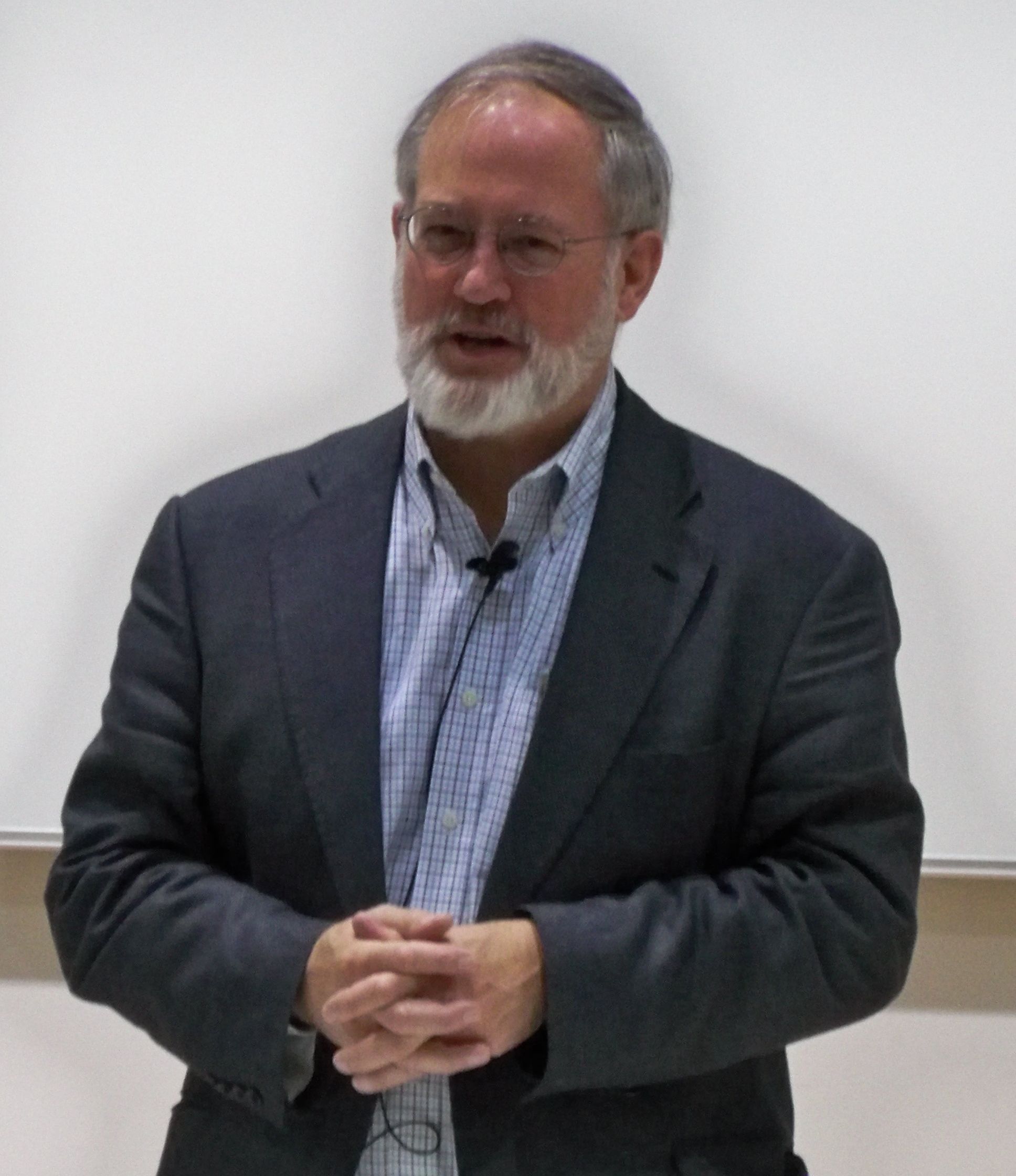 Randolph Nesse · Good Reasons for Bad Feelings, 2019
A note on the inventory. The mechanism numbering (M1-M14, R1) reflects the chronological order in which the convergence layer was assembled, not priority. Both terms of the loss function - survival and reproduction - are load-bearing throughout the inventory. Survival is directly anchored by M1, M6, M7, M8, M10, M12, and M13. Reproduction is directly anchored by M14, and is also load-bearing in M3 (pair-bonding under the attachment framing), M9 (parental investment under the alloparenting framing), and M5 (mate-value signaling under the status framing). An optimizer aligned to either term of inclusive fitness while ignoring the other will produce predictable failures the atlas describes.
Loading mechanisms…
What the social system receives today
Forty-seven bodies detected. Zero recognized. Zero bonds. Proximity is not belonging to this architecture. The social system was built around a stable group of 150 or fewer known individuals. The cortisol cost of compressed personal space with strangers runs continuously. The oxytocin return runs at zero.
What the play system receives today
Dopamine maxed on a supernormal stimulus. Movement, real-play engagement, and oxytocin at zero. The systems are being built right now. The inputs will shape them permanently. The system isn't broken; it's calibrating against exactly what it's being shown.
What threat management was built for
An immediate, specific, locatable predator. Fight-or-flight reaches closure within minutes. The cortisol clears. The body returns to baseline. One of the oldest systems in the organism, calibrated for exactly this shape of threat.
What it actually fires on now
The same architecture. A territorial violation it cannot fight, cannot flee, cannot resolve. No valid target. No physical outlet. The body is ready for combat. You are in a chair. The system isn't malfunctioning; it's reading the inputs it was given (OF2).
Demonstrations
What happens when the inputs change.
Loading demonstrations…
Challenges
Findings that push back.
Loading challenges…
Interpretive Calls
Where Cor is taking a position, not reporting consensus.
The atlas integrates fields that do not agree with each other on every question. Where the evidence converges, the atlas reports the convergence. Where the evidence diverges and the atlas has to take a position to be coherent, the position is Cor's interpretive call, not a statement of consensus. This section names the calls.
Affective architecture
The atlas treats Panksepp's basic-affect architecture (SEEKING, FEAR, RAGE, LUST, CARE, PANIC/GRIEF, PLAY) as the primary structural reference for subcortical motivational systems. Lisa Feldman Barrett's constructionist account of emotion is a serious alternative the atlas does not currently adopt. The reasoning: Panksepp's framework integrates more cleanly with comparative neuroscience and the phylogenetic depth principle, and gives the atlas the discrete-mechanism handles the application layer needs. The constructionist literature is acknowledged in the Challenges section.
Inclusive fitness and gene-culture coevolution
The atlas treats inclusive fitness as the loss function the architecture was selected against (Foundation P1). It does not treat gene-culture coevolution as a competing framework but as a refinement that operates within the same selection logic. Researchers who treat the two as fundamentally distinct frames may read this as an interpretive bet.
Strong vs weak mismatch
The atlas takes the strong-mismatch position: the modern environment is systematically misaligned with the architecture, and that misalignment is the primary driver of widespread non-pathological distress. Weak-mismatch readings - environments are different but the architecture is sufficiently flexible that the mismatch is mostly absorbed - are addressed in the Challenges section but not adopted.
Domain-sensitive architecture vs general learning
The atlas treats the human motivational-emotional architecture as domain-sensitive (domain-specific adaptations exist and can be enumerated), not as the output of a general-purpose learning system. This is a position in an ongoing argument and the atlas is not neutral on it.
These are the largest interpretive calls. Smaller calls are noted at the level of the individual mechanism page where they apply.
Gaps
What the atlas does not yet know.
Loading gaps…